
Hlawga National Park
Wildlife Sanctuary • Nature Conservation • Eco-Tourism
Open Daily (Including Public Holidays) • 8:00 AM to 5:00 PM
8 to 10 years in the wild and 13 to 15 years in captivity.
The red panda’s diet mainly consists of bamboo, but they also eat fruits, berries, flowers, insects, eggs, and small mammals.
Temperate forests in the Himalayan region and nearby areas, with dense bamboo understories, plenty of trees for climbing, and cool, moist climates.
Himalayan region and surrounding areas of Asia, including Nepal, India, Bhutan, Myanmar, and southwestern China, mostly in temperate forests with bamboo understories.
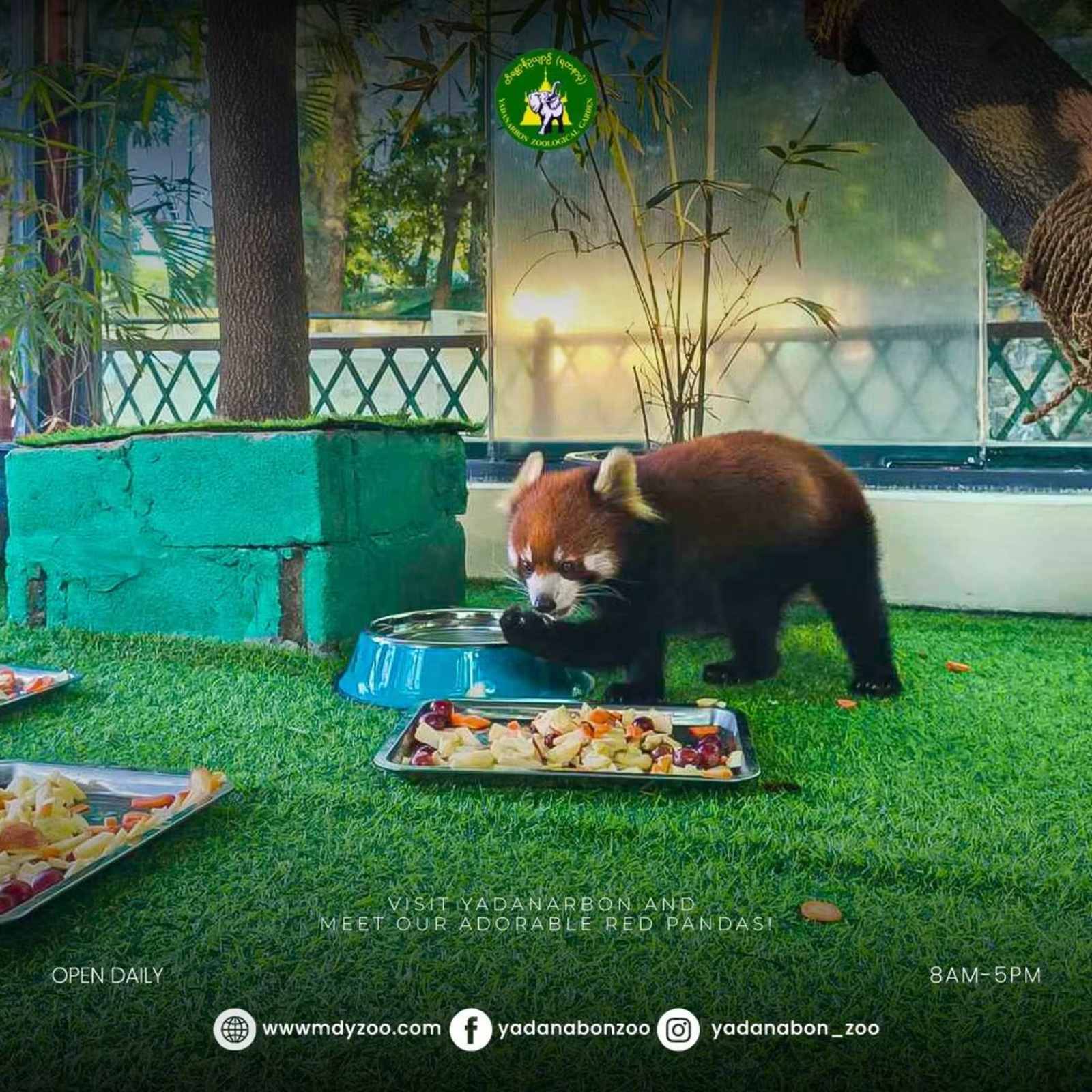
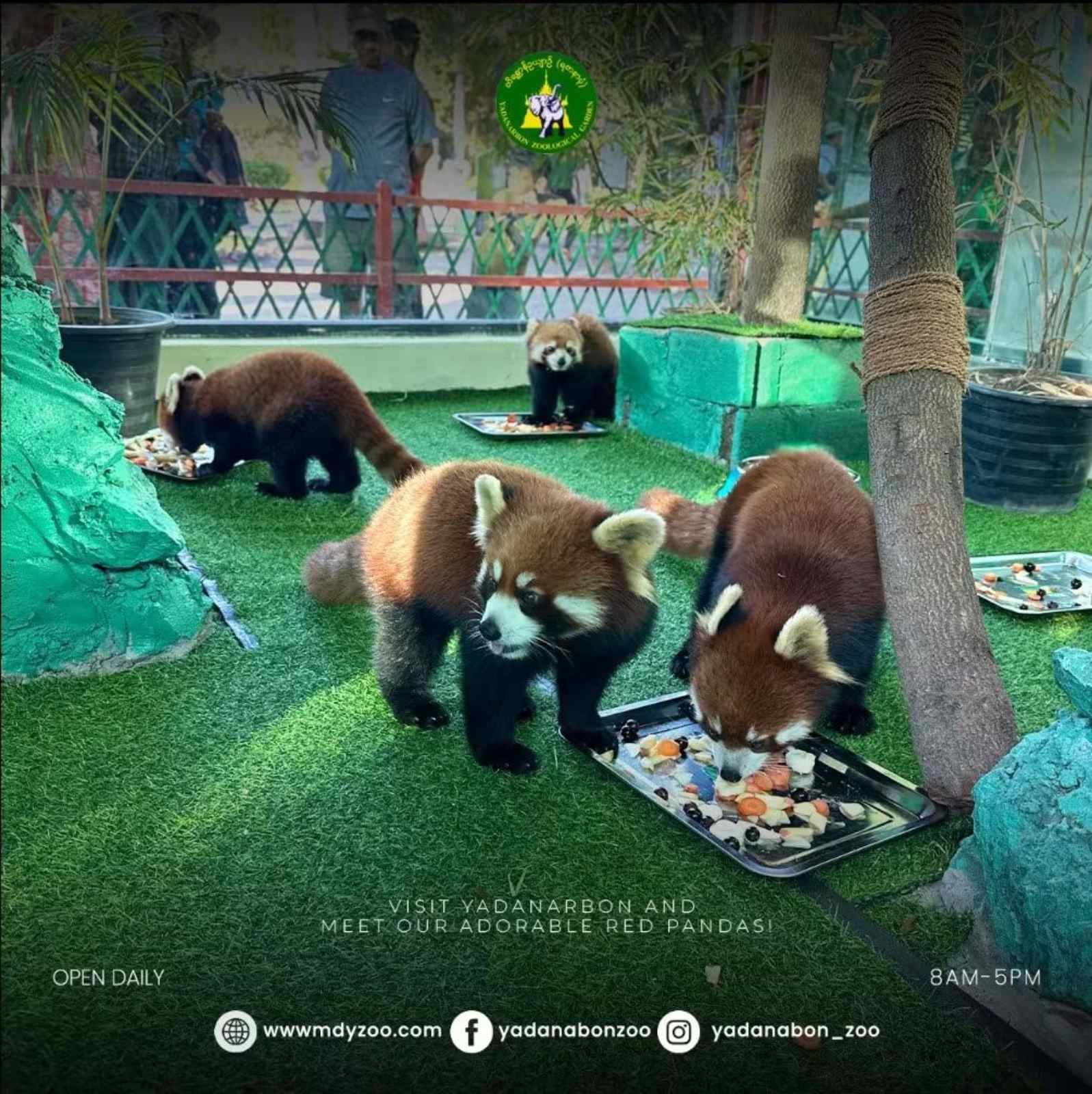


The red panda is a small, tree-dwelling mammal with reddish-brown fur, a bushy ringed tail, dark legs and belly, white facial markings, and tear-like streaks under its eyes. The tail has alternating red and black rings, so it is lovingly called the red panda or the fire fox because of its cute appearance.
Rd Panda are classified as Endangered by the IUCN Red List